Tina Carter · 10 November 2026
The Hidden Dynamics of Frame Joinery Patterns in Weather-Resistant Cottage Builds Across Varied Terrains
Frame joinery patterns in cottage construction adapt to environmental stresses through specific interlocking methods that distribute loads and resist moisture infiltration across diverse landscapes, and researchers have documented these techniques in field studies spanning multiple decades. Traditional mortise-and-tenon joints combined with modern reinforcements create stable frames that handle wind shear in open plains while also managing thermal contraction in colder regions, yet the underlying mechanics shift based on soil composition and elevation changes.
Core Joinery Techniques and Their Structural Roles
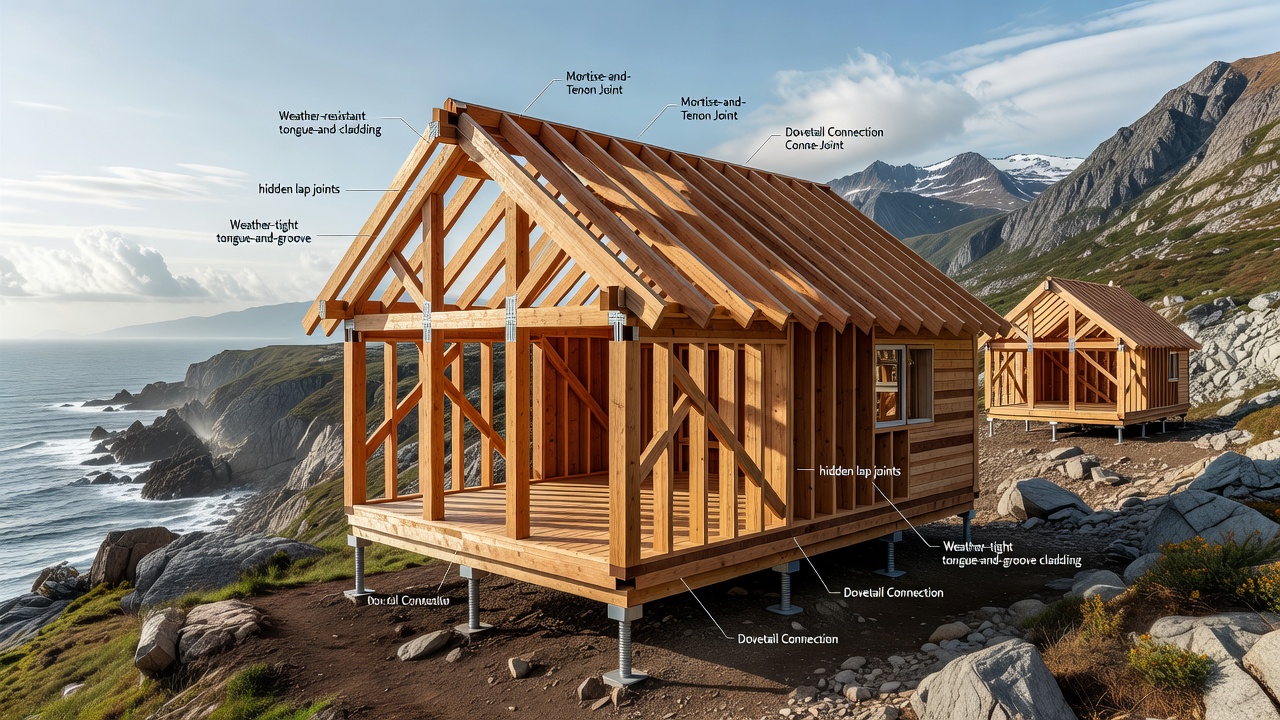
Builders employ lap joints, dovetail connections, and pegged timber frames to create rigid skeletons that maintain integrity under repeated weather cycles, and data from monitoring programs shows these patterns reduce frame movement by measurable percentages when installed with precise tolerances. The choice of joinery influences how forces travel through the structure, with finger joints providing flexibility in areas prone to ground settlement while bridle joints offer greater resistance to uplift in exposed sites. Observers note that regional variations emerge naturally because local wood species interact differently with humidity levels and temperature swings, which affects long-term performance without requiring external treatments in many cases.
Studies conducted by the USDA Forest Service indicate that joinery density and orientation directly correlate with reduced water penetration rates in tested assemblies, and this holds true whether the build occurs on sandy coastal soils or rocky inland slopes. Patterns that incorporate hidden tenons or wedged connections add layers of security against seasonal expansion, allowing the frame to breathe while preventing gaps that invite decay organisms.
Adaptations Across Coastal, Mountainous, and Flatland Terrains
Along coastlines where salt spray accelerates corrosion, joinery patterns favor overlapping surfaces sealed with natural resins that create barriers without trapping moisture, and construction records reveal these methods maintain frame alignment during storm events that exceed standard wind ratings. In mountainous zones with heavy snow accumulation, builders integrate reinforced shoulder joints and angled braces that transfer vertical loads downward into foundations designed for frost heave, whereas flatter terrains allow for simpler through-tenon configurations that prioritize lateral stability against gusts.
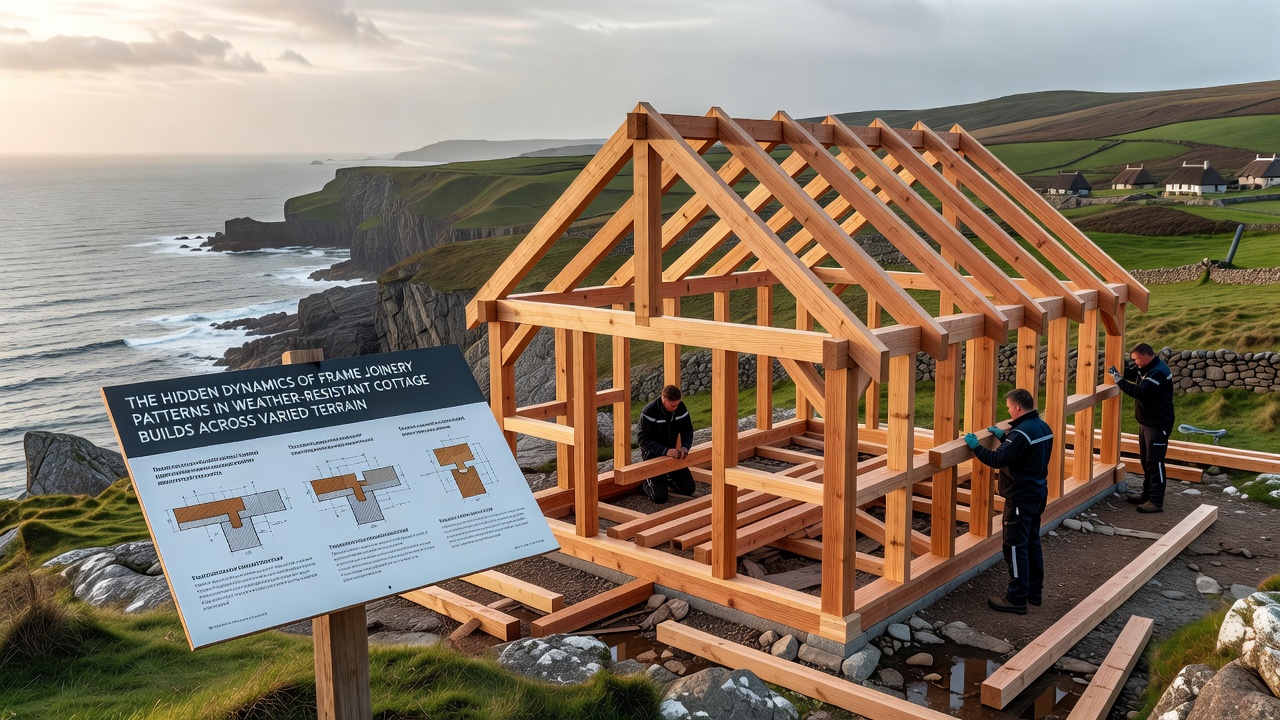
Those who've examined builds in the Pacific Northwest and similar temperate rainforests report that interlocking dovetails combined with strategic kerfing help manage constant dampness by directing water away from critical contact points, and comparable techniques appear in European highland projects documented by research institutions. Flatland environments introduce different challenges related to soil movement, prompting the use of floating tenon systems that accommodate minor shifts without compromising overall rigidity. As of November 2026, updated monitoring data continues to track how these patterns perform under increasingly variable precipitation patterns, confirming consistent outcomes across tested sites when materials are sourced and seasoned according to established protocols.
Material Interactions and Long-Term Weather Resistance
Wood species selection pairs with joinery patterns to determine overall resilience, and evidence from long-term installations shows that dense hardwoods paired with precise pegged connections outperform softer options in high-wind corridors. The Canadian Wood Council has compiled statistics demonstrating that properly executed joinery extends service life by limiting micro-movement that leads to fastener fatigue, while also preserving the natural movement characteristics of timber. In arid terrains, simpler half-lap patterns suffice because reduced moisture cycling minimizes swelling pressures, allowing builders to focus resources on foundation anchoring instead.
Researchers have observed that combining traditional hand-cut joinery with contemporary adhesives at key stress points creates hybrid systems that address both historical durability records and modern load requirements, and this approach appears across projects in Australia and Scandinavia where terrain diversity mirrors North American conditions. The hidden dynamics often lie in how grain direction aligns with joint orientation, a factor that influences crack propagation during freeze-thaw cycles common in higher elevations.
Conclusion
Frame joinery patterns continue to evolve through accumulated field data and material science advancements, providing reliable frameworks for weather-resistant cottages regardless of terrain type. The documented interactions between joint geometry, wood properties, and environmental forces offer practical guidance for future construction while preserving techniques refined over generations.