Finley Flores · 13 October 2026
Seasonal Light Patterns and Their Role in Shaping Fabric Selection for Remote Rustic Interiors
Remote rustic interiors experience distinct shifts in natural illumination throughout the year because Earth's axial tilt creates predictable variations in daylight duration and solar angle, and these changes directly influence how fabrics perform over time in settings like cabins and off-grid dwellings. Data from meteorological networks show that northern hemisphere locations receive up to 15 hours of daylight in June while October brings roughly 10 hours with lower sun elevation, altering ultraviolet exposure and heat gain on interior surfaces.
Tracking Daylight Cycles in Isolated Locations
Researchers at institutions such as the Finnish Meteorological Institute have documented how high-latitude sites receive oblique sunlight during autumn months, which reduces intensity yet extends across larger wall and floor areas compared with the steeper summer rays. Observers note that this oblique angle increases the duration fabrics remain exposed to lower-level but persistent radiation, particularly on north-facing windows common in remote structures. In October 2026, updated satellite records continue to confirm these established seasonal baselines without significant deviation from multi-decade averages.
Remote sites often lack artificial lighting grids, so interior designers and property managers rely on fabric choices that manage both incoming light and retained warmth. Studies from the University of British Columbia's daylighting laboratory indicate that fabric reflectance and transmittance properties must account for these annual cycles to maintain consistent interior conditions without supplemental energy inputs.
Ultraviolet Exposure and Fabric Degradation
Ultraviolet radiation peaks during summer months when solar elevation reaches its maximum, accelerating fading in dyes and weakening natural fibers such as linen and cotton. Data collected by the Australian Bureau of Meteorology reveal that cumulative UV dosage in southern hemisphere winter months drops sharply, allowing certain fabrics to retain color longer when positioned near large south-facing openings. Those managing remote properties therefore select materials with documented UV resistance ratings that align with local solar calendars rather than generic manufacturer claims.
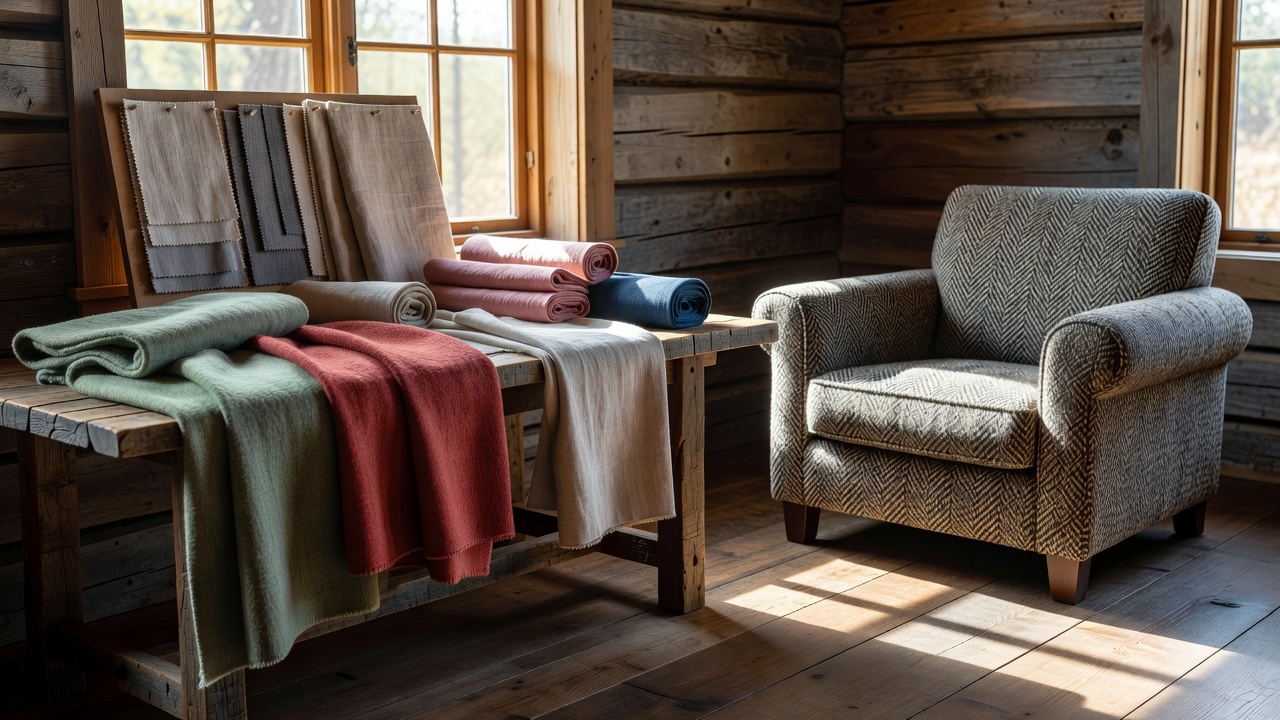
Wool and certain treated synthetics demonstrate greater resilience during high-exposure periods because their molecular structures scatter shorter wavelengths more effectively. Evidence from textile research programs shows that undyed or naturally pigmented fabrics experience slower photodegradation under oblique autumn light, a factor that becomes relevant when selecting upholstery for seating areas that receive indirect illumination throughout the day.
Thermal Regulation Through Fabric Properties
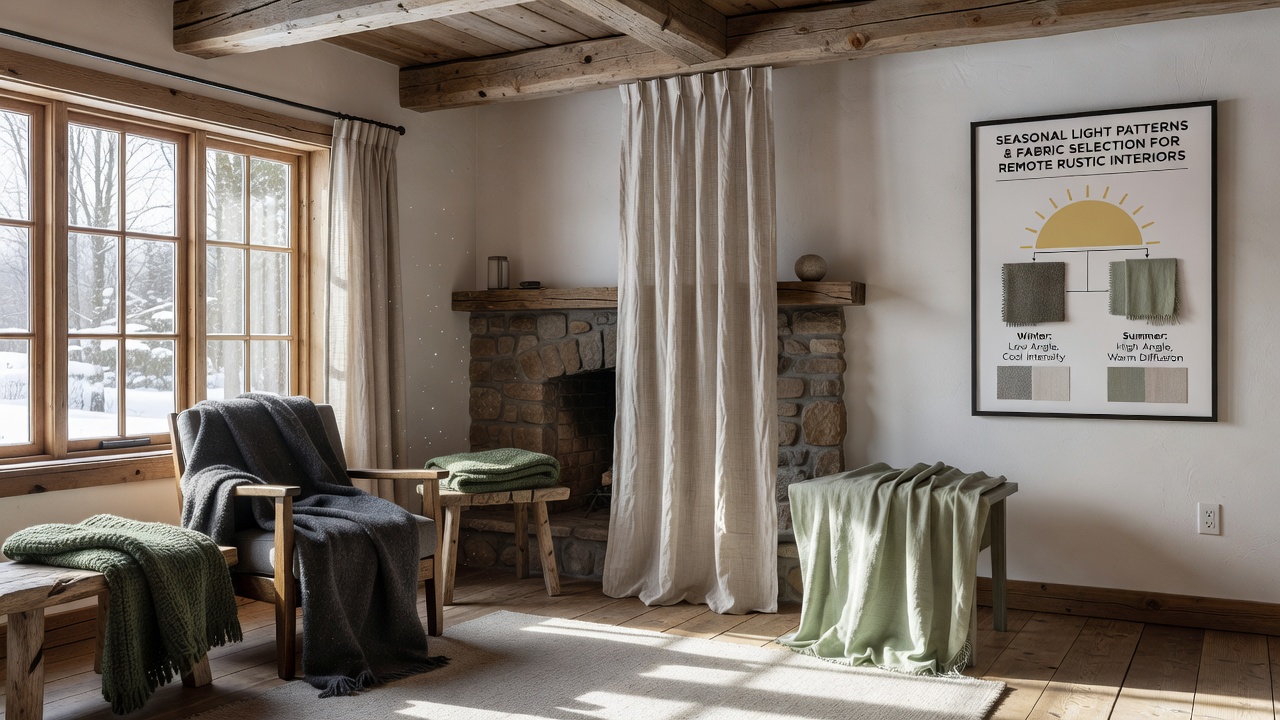
Winter months bring shorter days and lower solar angles that reduce passive heat gain, prompting selection of denser weaves and heavier weights to retain interior warmth once the sun sets. Thermal transmittance measurements compiled by Natural Resources Canada demonstrate that layered fabric treatments can reduce heat loss through single-pane windows typical in older rustic buildings by measurable percentages when chosen to match seasonal light availability. Conversely, summer requires lighter, more open weaves that permit airflow while diffusing intense midday light.
People responsible for remote interiors frequently examine historical solar radiation datasets for their specific latitude before finalizing fabric orders, because regional variations in cloud cover and atmospheric moisture further modulate effective light exposure. This approach ensures that selections support both durability and energy efficiency across full annual cycles.
Practical Considerations for Material Choices
Color selection follows from light-angle data because darker tones absorb more heat during low-sun months while lighter shades reflect excess radiation in summer. Industry reports from the European Committee for Standardization highlight standardized testing protocols that quantify fabric performance under simulated seasonal spectra, giving specifiers measurable criteria rather than visual estimates alone. Remote builders often combine these metrics with local observations of how morning versus afternoon light strikes particular walls.
Maintenance intervals also shift with seasonal patterns, since fabrics exposed to prolonged low-angle light collect dust differently than those under direct overhead sun. Cleaning schedules derived from field monitoring help preserve both appearance and functional properties without unnecessary interventions.
Conclusion
Seasonal light patterns establish measurable parameters that guide fabric selection in remote rustic settings through documented effects on fading rates, thermal behavior, and light diffusion. Meteorological records, university studies, and standardized testing protocols supply the factual basis for matching material characteristics to annual solar cycles, enabling consistent performance across changing conditions.